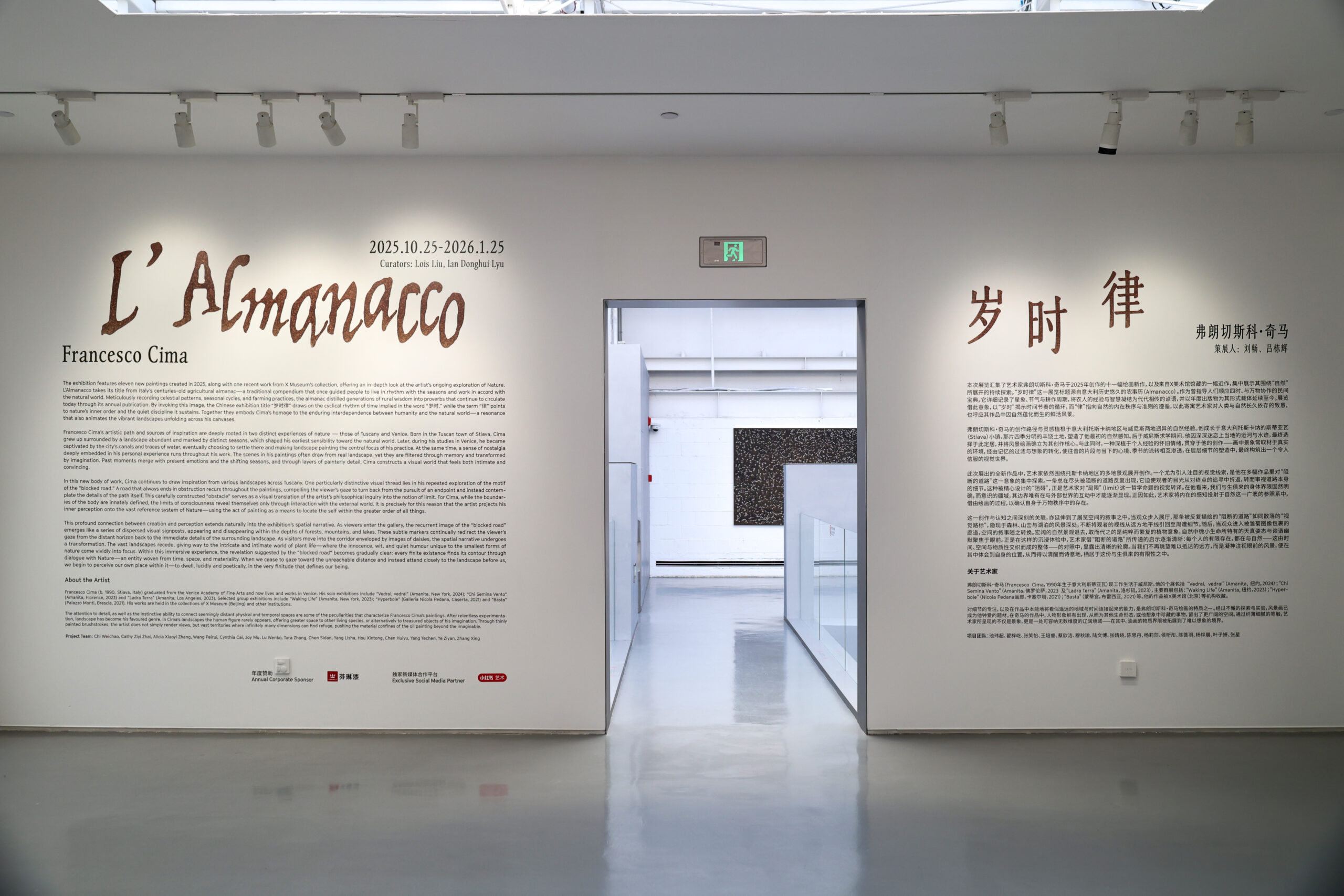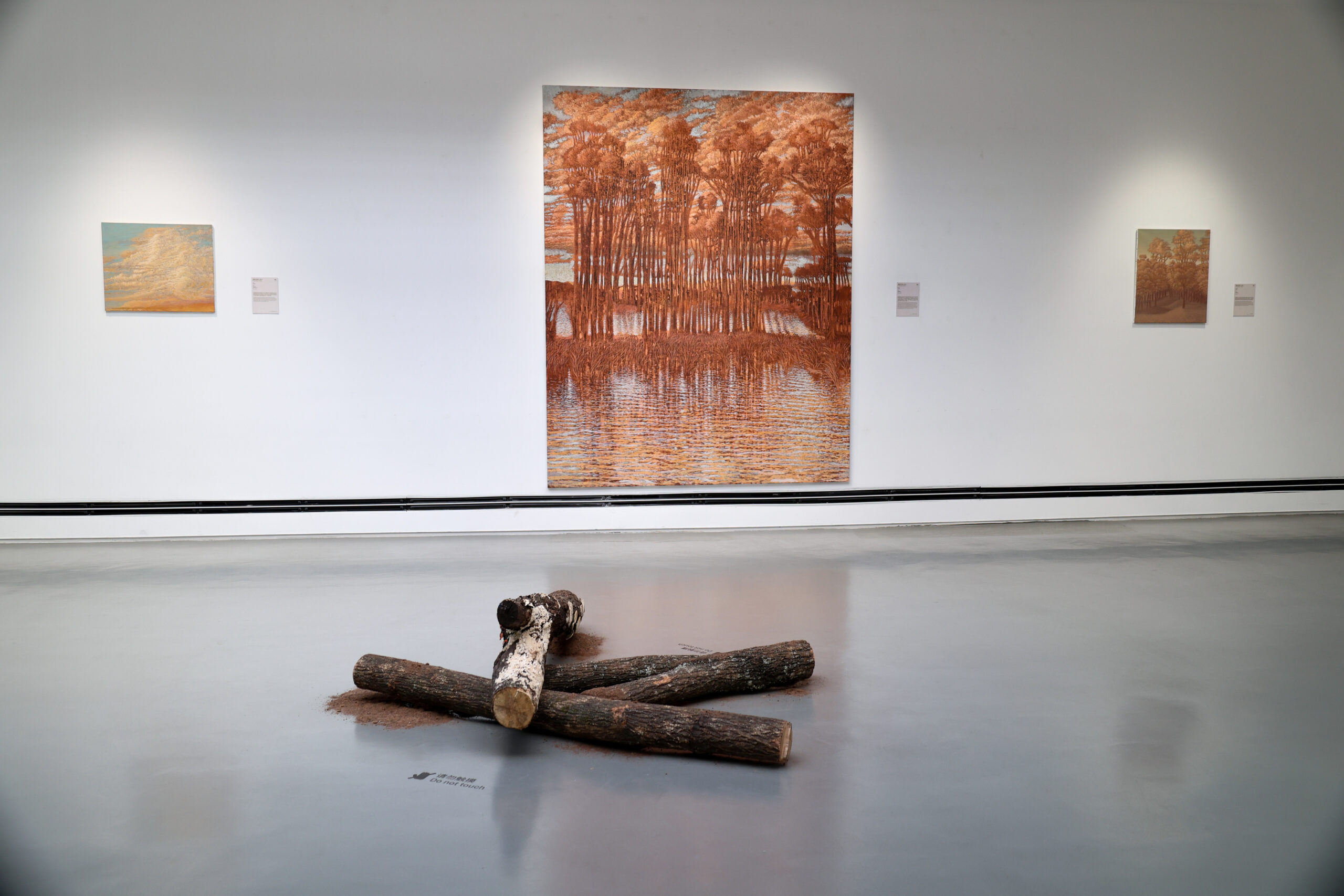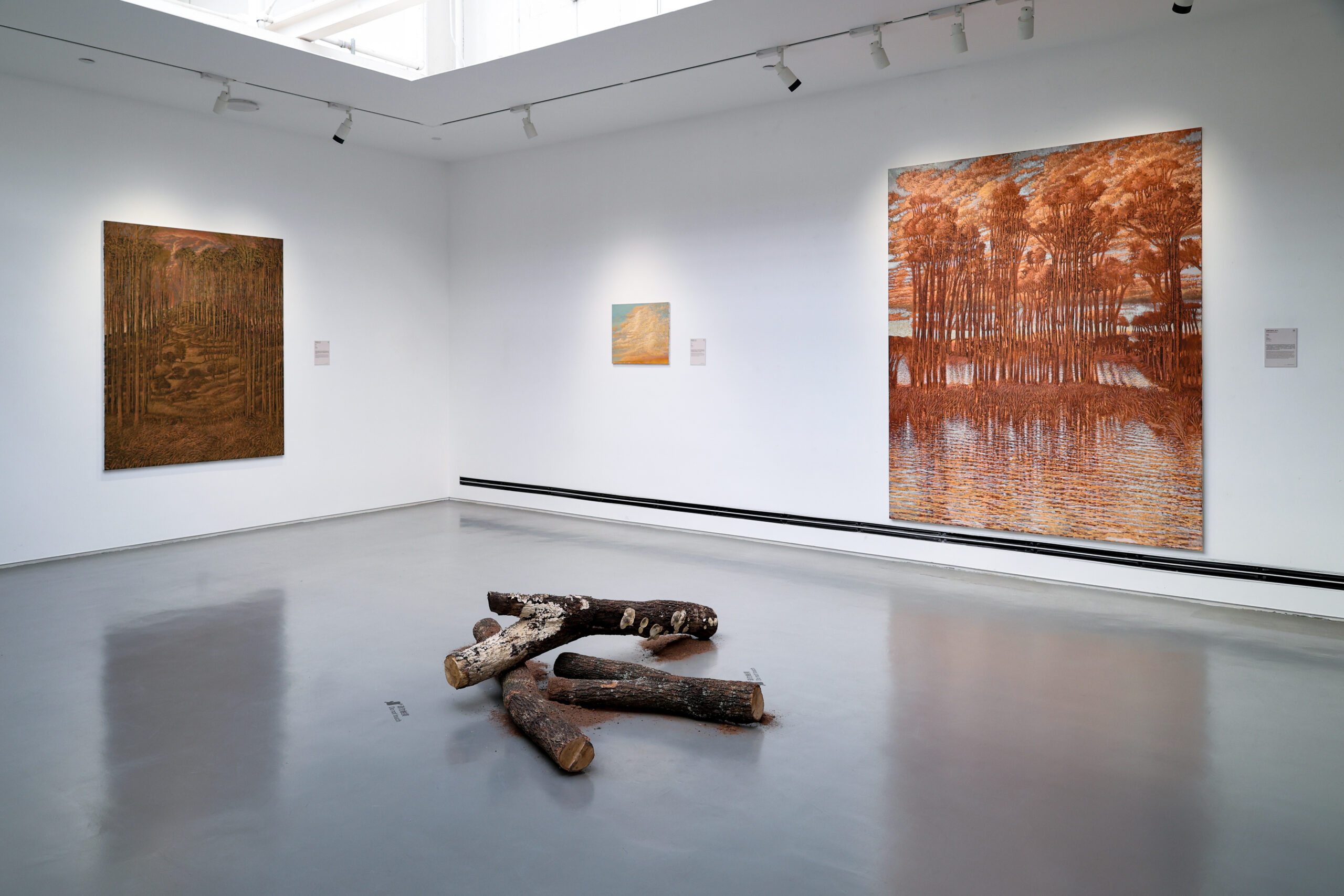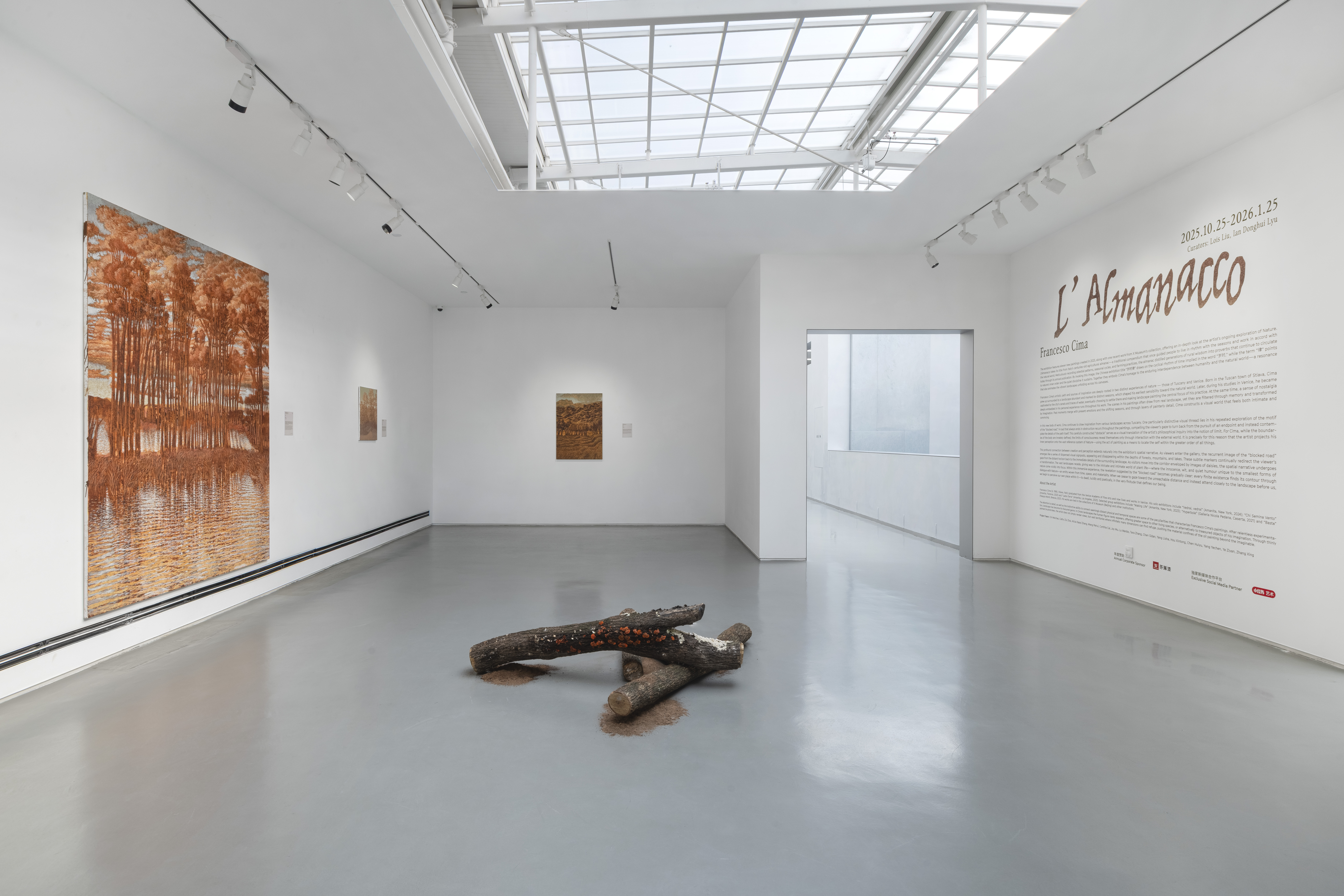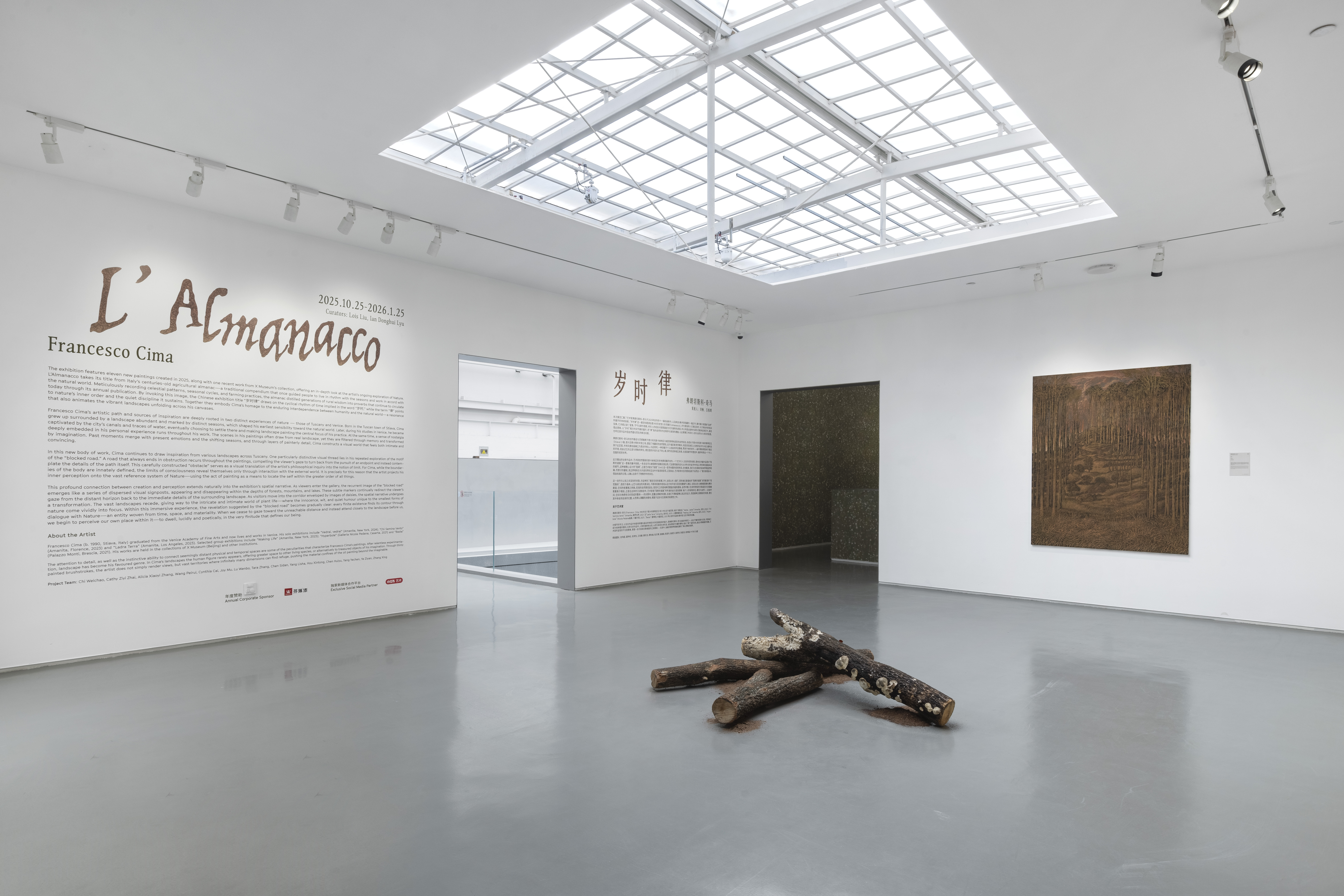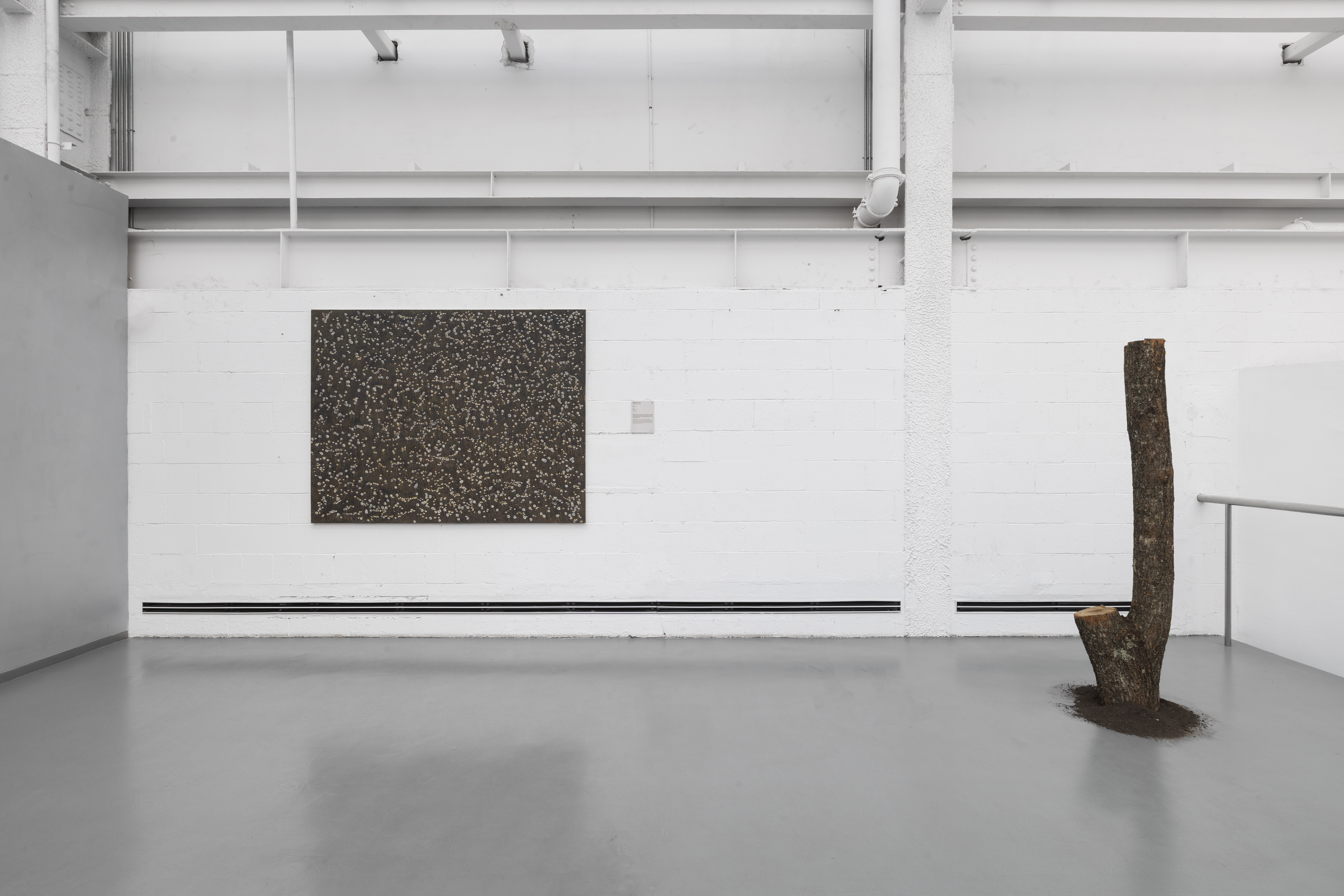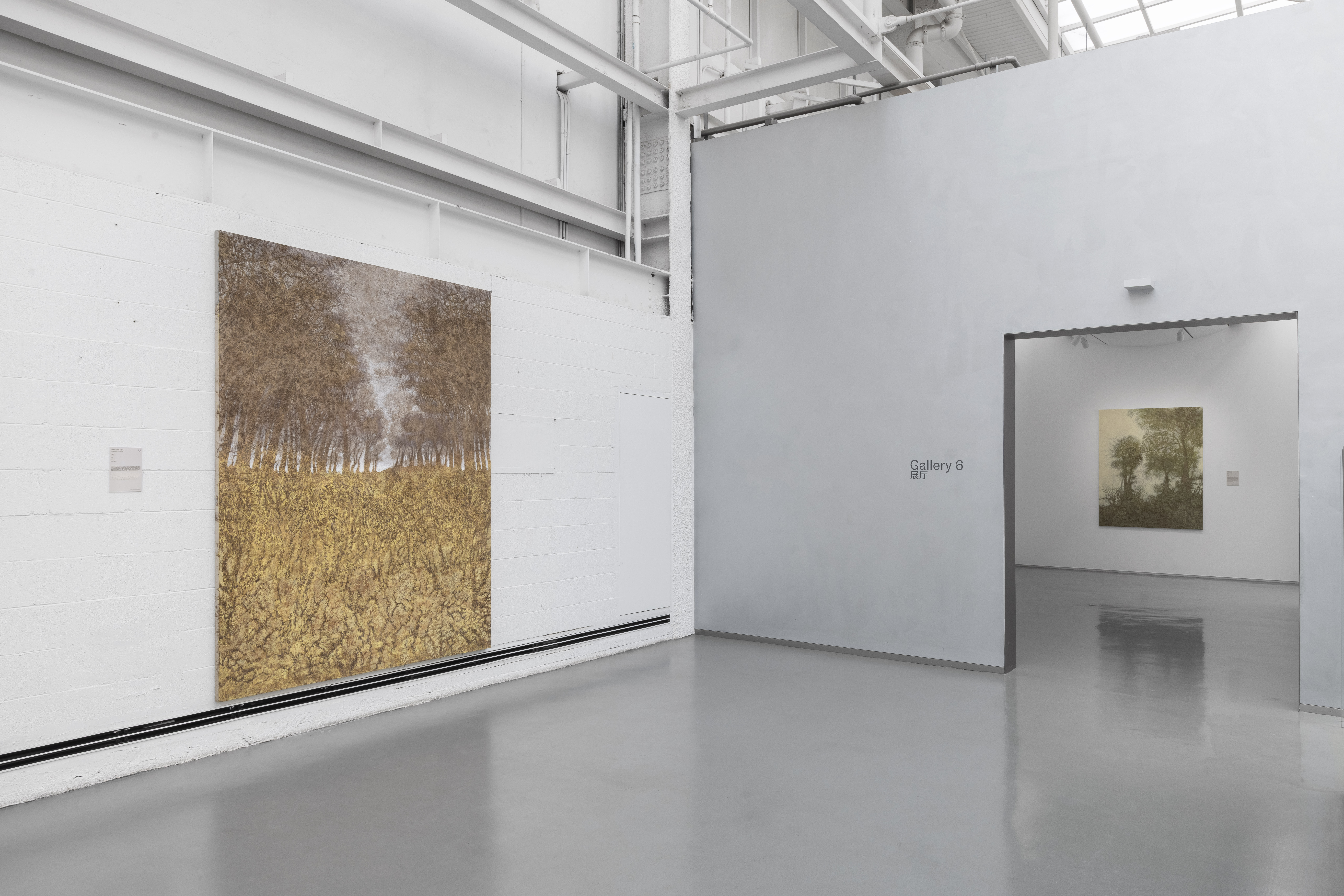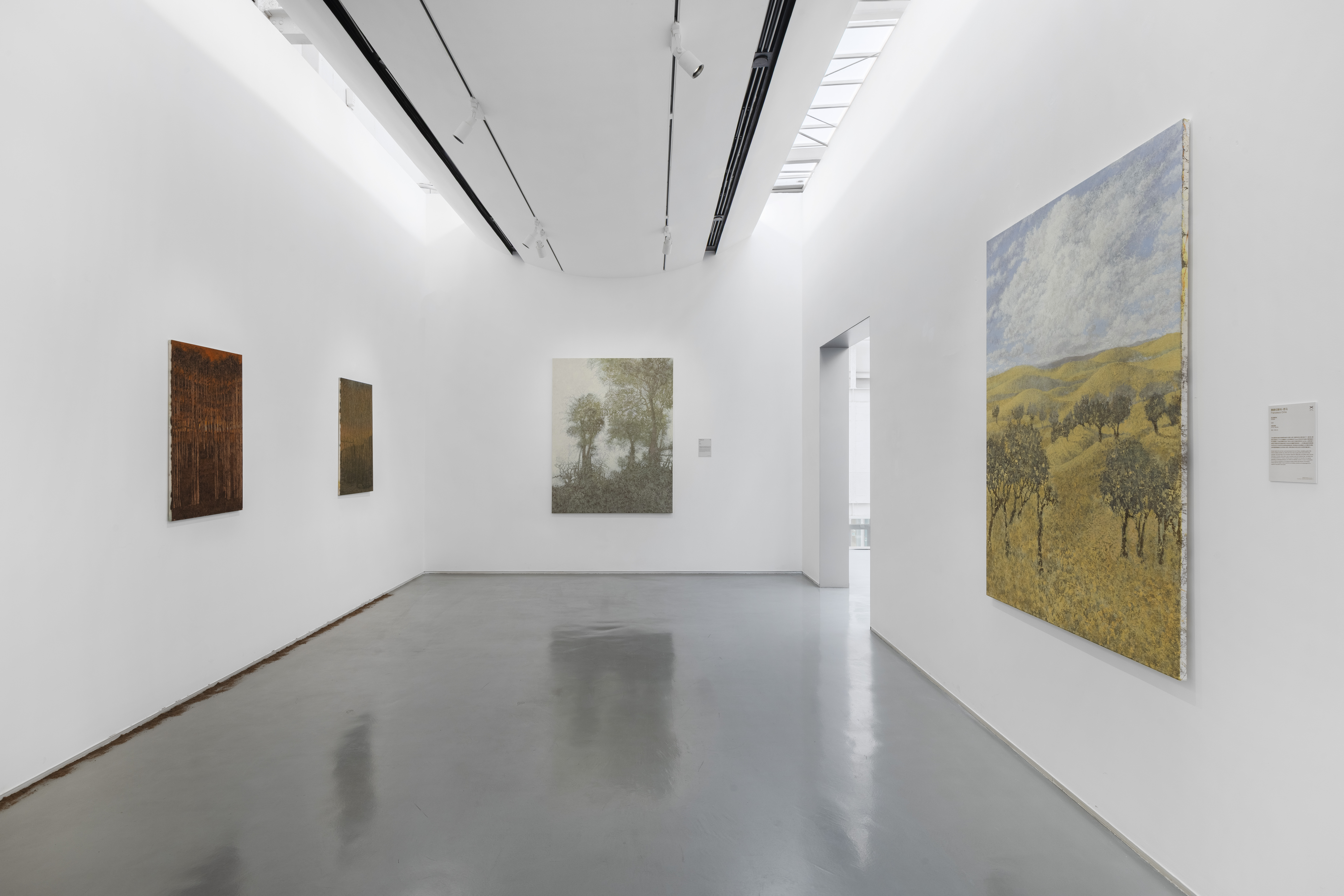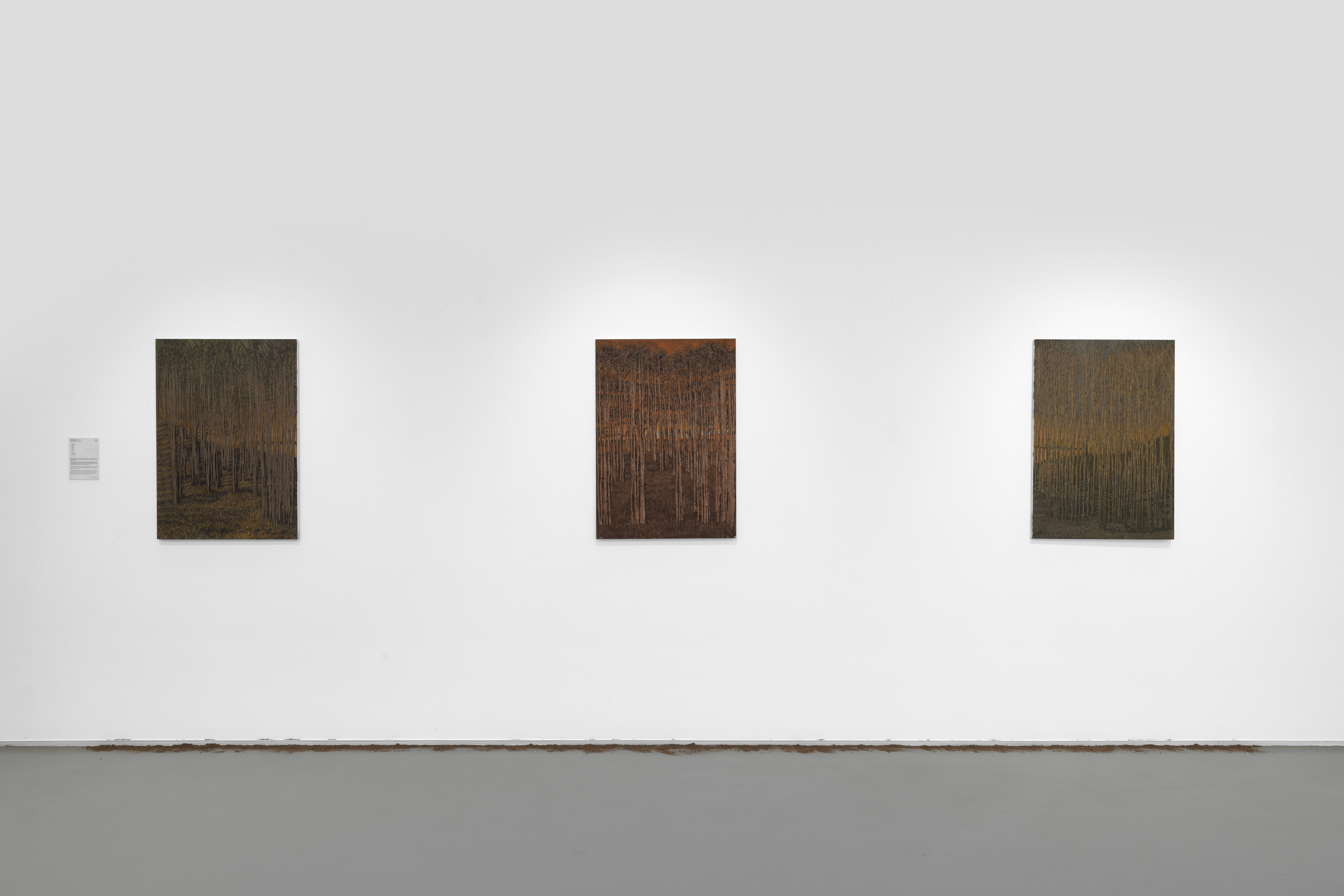





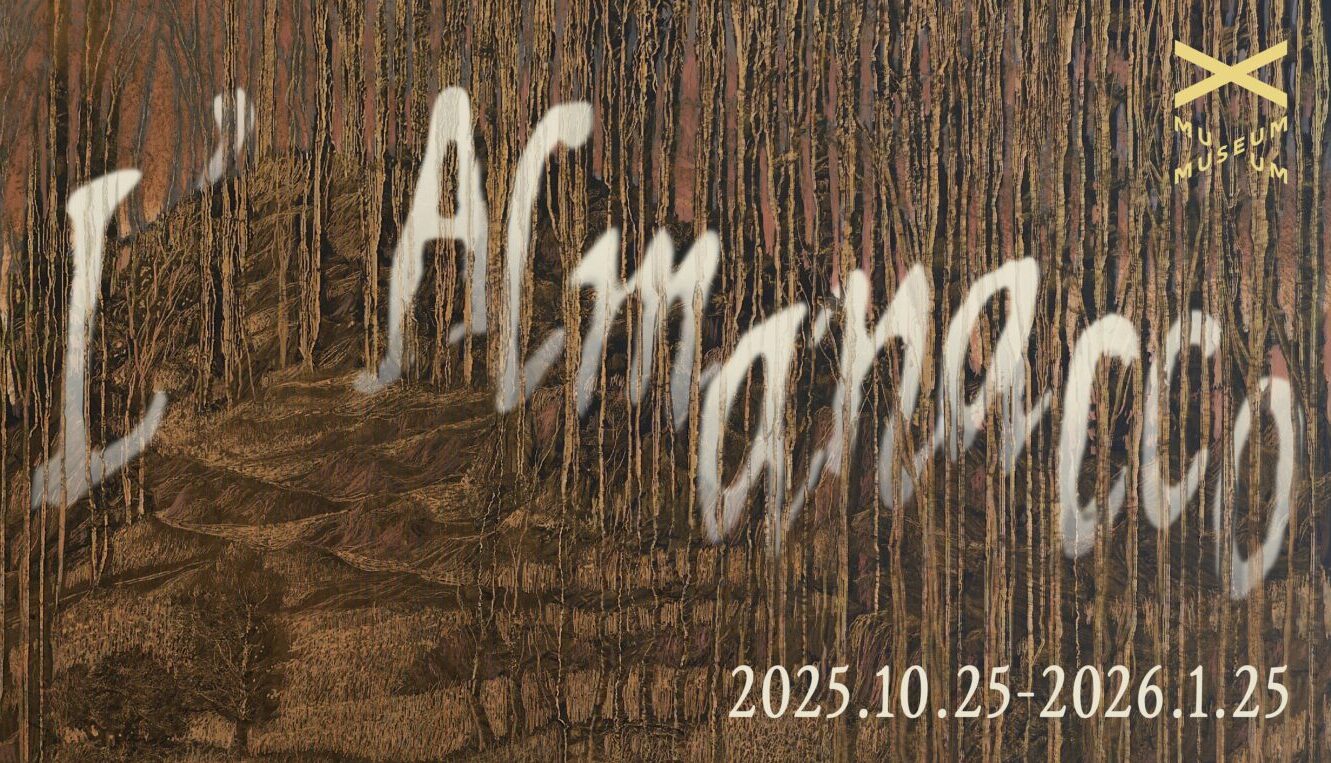
From October 25, 2025, to January 25, 2026, X Museum presents L’Almanacco, the first institutional solo exhibition in China by Italian artist Francesco Cima, on view in the museum’s second-floor space. X Museum maintains its commitment to nurturing emerging artists through acquisition, research and curation, thereby fostering international cultural exchange. The exhibition features eleven new paintings created in 2025, along with one recent work from the museum’s collection, offering an in-depth look at the artist’s ongoing exploration of Nature.
L’Almanacco takes its title from Italy’s centuries-old agricultural almanac—a traditional compendium that once guided people to live in rhythm with the seasons and work in accord with the natural world. Meticulously recording celestial patterns, seasonal cycles, and farming practices, the almanac distilled generations of rural wisdom into proverbs that continue to circulate today through its annual publication. By invoking this image, the Chinese exhibition title “岁时律” draws on the cyclical rhythm of time implied in the word “岁时,” while the term “律” points to nature’s inner order and the quiet discipline it sustains. Together they embody Cima’s homage to the enduring interdependence between humanity and the natural world—a resonance that also animates the vibrant landscapes unfolding across his canvases.
Francesco Cima’s artistic path and sources of inspiration are deeply rooted in two distinct experiences of nature — those of Tuscany and Venice. Born in the Tuscan town of Stiava, Cima grew up surrounded by a landscape abundant and marked by distinct seasons, which shaped his earliest sensibility toward the natural world. Later, during his studies in Venice, he became captivated by the city’s canals and traces of water, eventually choosing to settle there and making landscape painting the central focus of his practice. At the same time, a sense of nostalgia deeply embedded in his personal experience runs throughout his work. The scenes in his paintings often draw from real landscape, yet they are filtered through memory and transformed by imagination. Past moments merge with present emotions and the shifting seasons, and through layers of painterly detail, Cima constructs a visual world that feels both intimate and convincing.
In this new body of work, Cima continues to draw inspiration from various landscapes across Tuscany. One particularly distinctive visual thread lies in his repeated exploration of the motif of the “blocked road.” A road that always ends in obstruction recurs throughout the paintings, compelling the viewer’s gaze to turn back from the pursuit of an endpoint and instead contemplate the details of the path itself. This carefully constructed “obstacle” serves as a visual translation of the artist’s philosophical inquiry into the notion of limit. For Cima, while the boundaries of the body are innately defined, the limits of consciousness reveal themselves only through interaction with the external world. It is precisely for this reason that the artist projects his inner perception onto the vast reference system of Nature—using the act of painting as a means to locate the self within the greater order of all things.
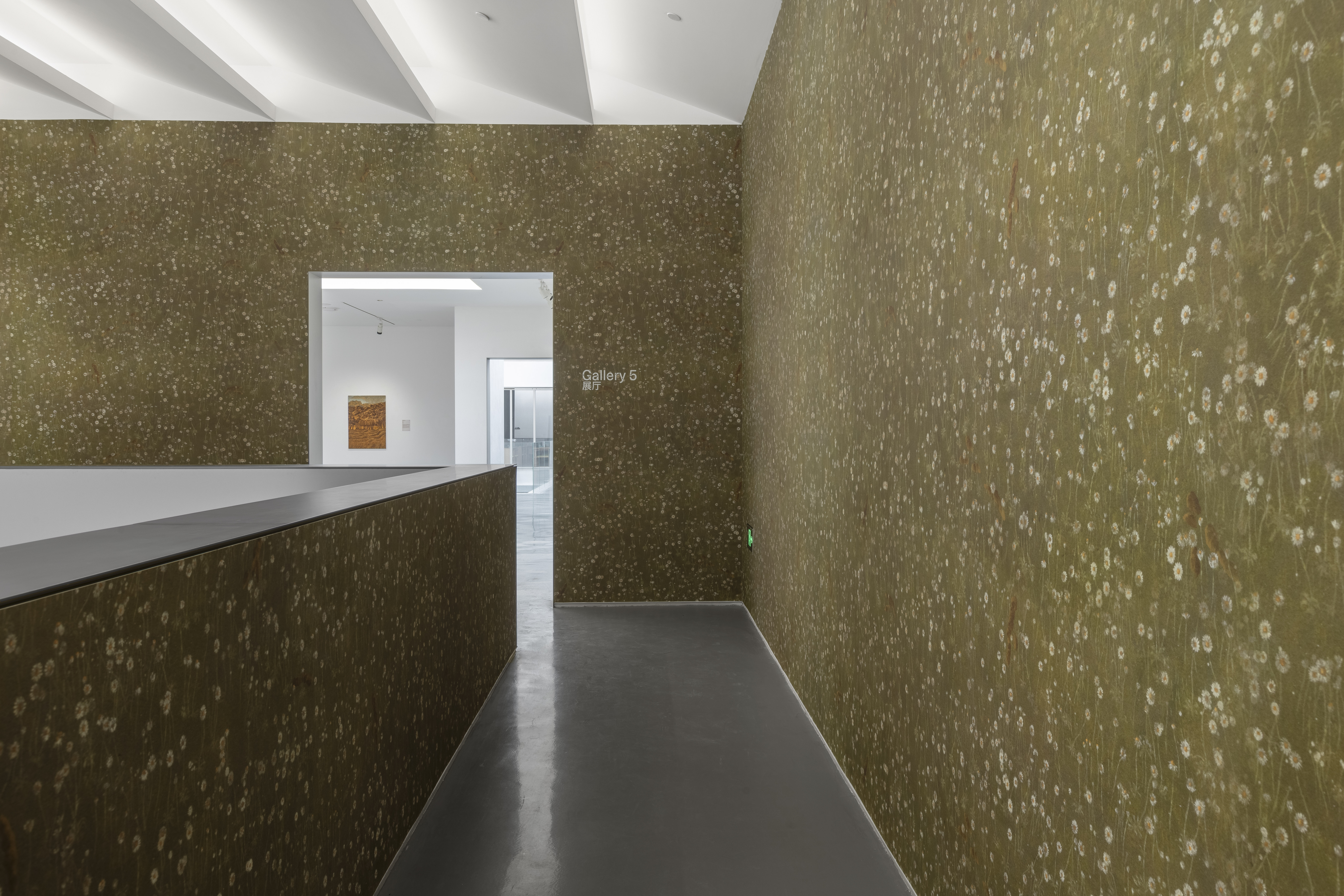
This profound connection between creation and perception extends naturally into the exhibition’s spatial narrative. As viewers enter the gallery, the recurrent image of the “blocked road” emerges like a series of dispersed visual signposts, appearing and disappearing within the depths of forests, mountains, and lakes. These subtle markers continually redirect the viewer’s gaze from the distant horizon back to the immediate details of the surrounding landscape. As visitors move into the corridor enveloped by images of daisies, the spatial narrative undergoes a transformation. The vast landscapes recede, giving way to the intricate and intimate world of plant life—where the innocence, wit, and quiet humour unique to the smallest forms of nature come vividly into focus. Within this immersive experience, the revelation suggested by the “blocked road” becomes gradually clear: every finite existence finds its contour through dialogue with Nature—an entity woven from time, space, and materiality. When we cease to gaze toward the unreachable distance and instead attend closely to the landscape before us, we begin to perceive our own place within it—to dwell, lucidly and poetically, in the very finitude that defines our being.
Artist
Francesco Cima (b. 1990, Stiava, Italy) graduated from the Venice Academy of Fine Artsand now lives and works in Venice. His solo exhibitions include “Vedrai, vedrai” (Amanita, New York, 2024); “Chi Semina Vento” (Amanita, Florence, 2023) and “Ladra Terra” (Amanita, Los Angeles, 2023). Selected group exhibitions include “Waking Life” (Amanita, New York, 2023); “Hyperbole” (Galleria Nicola Pedana, Caserta, 2021) and “Basta” (Palazzo Monti, Brescia, 2021). His works are held in the collections of X Museum (Beijing)and other institutions.
The attention to detail, as well as the instinctive ability to connect seemingly distantphysical and temporal spaces are some of the peculiarities that characterize Francesco Cima’s paintings. After relentless experimentation, landscape has become his favouredgenre. In Cima’s landscapes the human figure rarely appears, offering greater space toother living species, or alternatively to treasured objects of his imagination. Throughthinly painted brushstrokes, the artist does not simply render views, but vast territorieswhere infinitely many dimensions can find refuge, pushing the material confines of theoil painting beyond the imaginable.
About The Artists
About The Curators